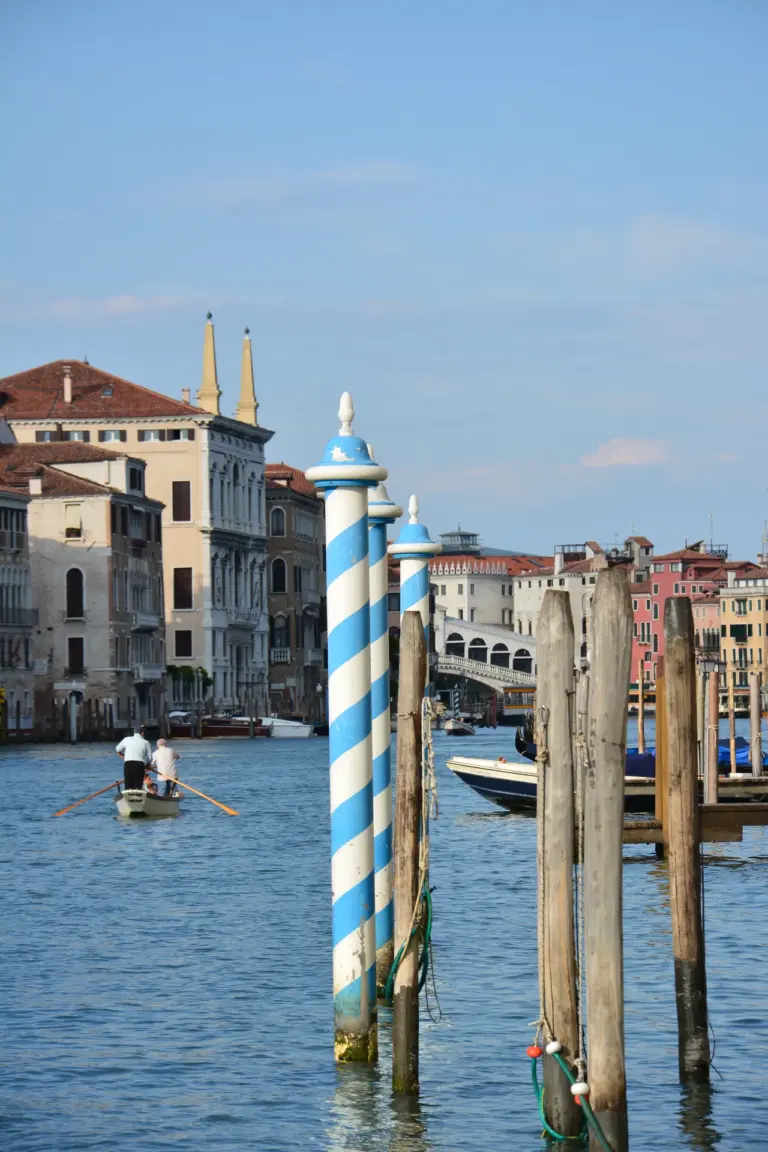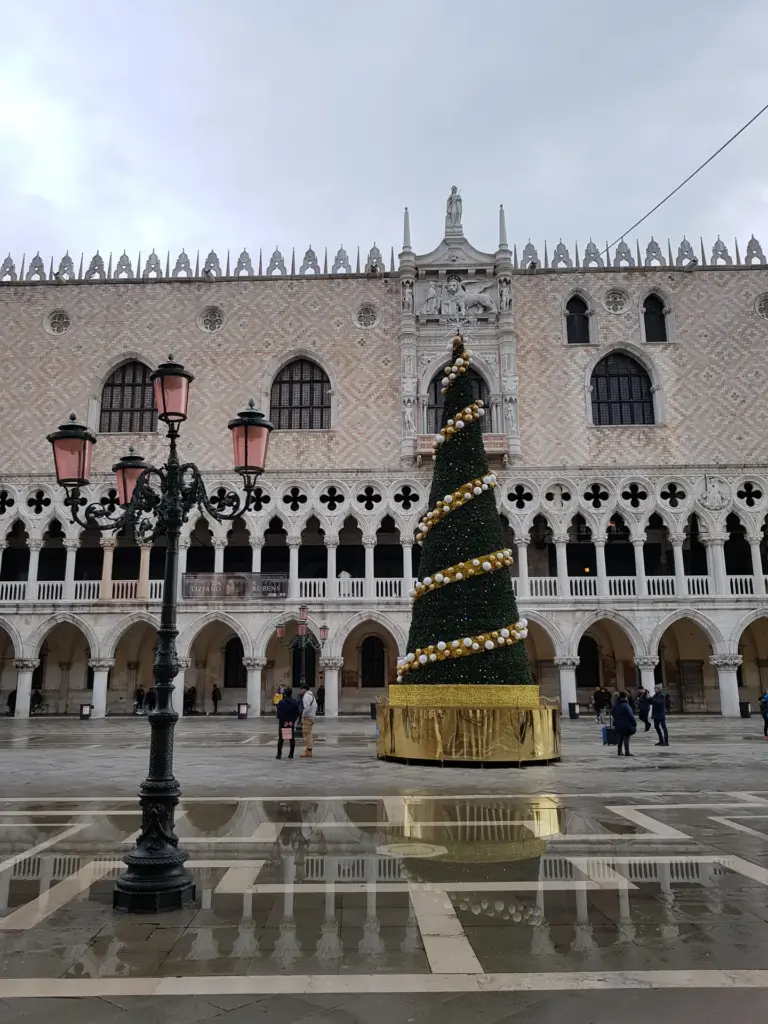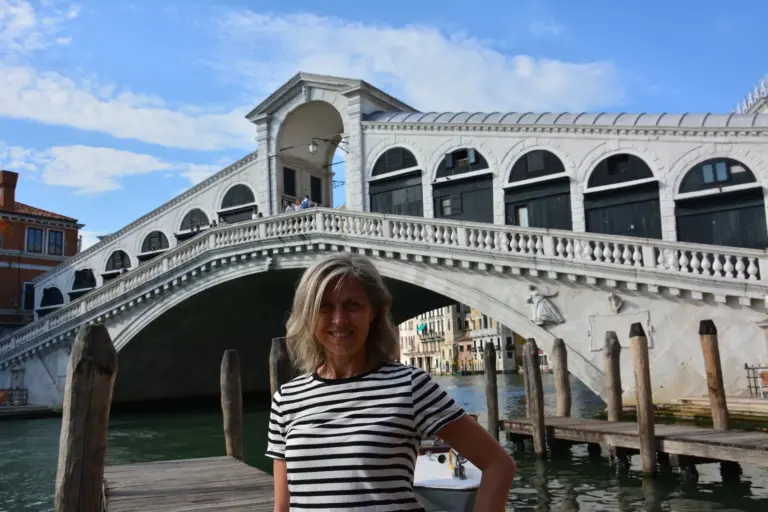
A Venetian address is made of the sestiere and a house number – for example “Castello 3456” – without a street name, because each of the six sestieri numbers all its buildings in a single series that runs into the thousands; to find the door, you also need the street name, which you read on the painted signs called nizioleti. Here is a short key to the words you will meet on your first walk through Venice, Italy.
How do Venetian house numbers work?
The present numbering dates back to the Austrian period in the 19th century. Instead of numbering each street, it gives every sestiere one sequence: it starts at 1 at one end of the district and continues, alley after alley, to the highest number at the other end. In San Marco the series ends at 5562, and in Castello it goes well beyond 6000. Neighboring doors usually follow each other, but the next number may be around a corner or across a canal.
A sestiere and number are all a mail carrier needs, but they are not enough for a visitor. When you receive the address of your apartment, a meeting point or an office, also ask for the name of the street or campo and the nearest vaporetto stop, and save the location on a map before you arrive.
What do calle, campo, fondamenta and rio mean?
- Calle: the ordinary street between two rows of buildings, from less than a meter to several meters wide; a calle larga is a wider one.
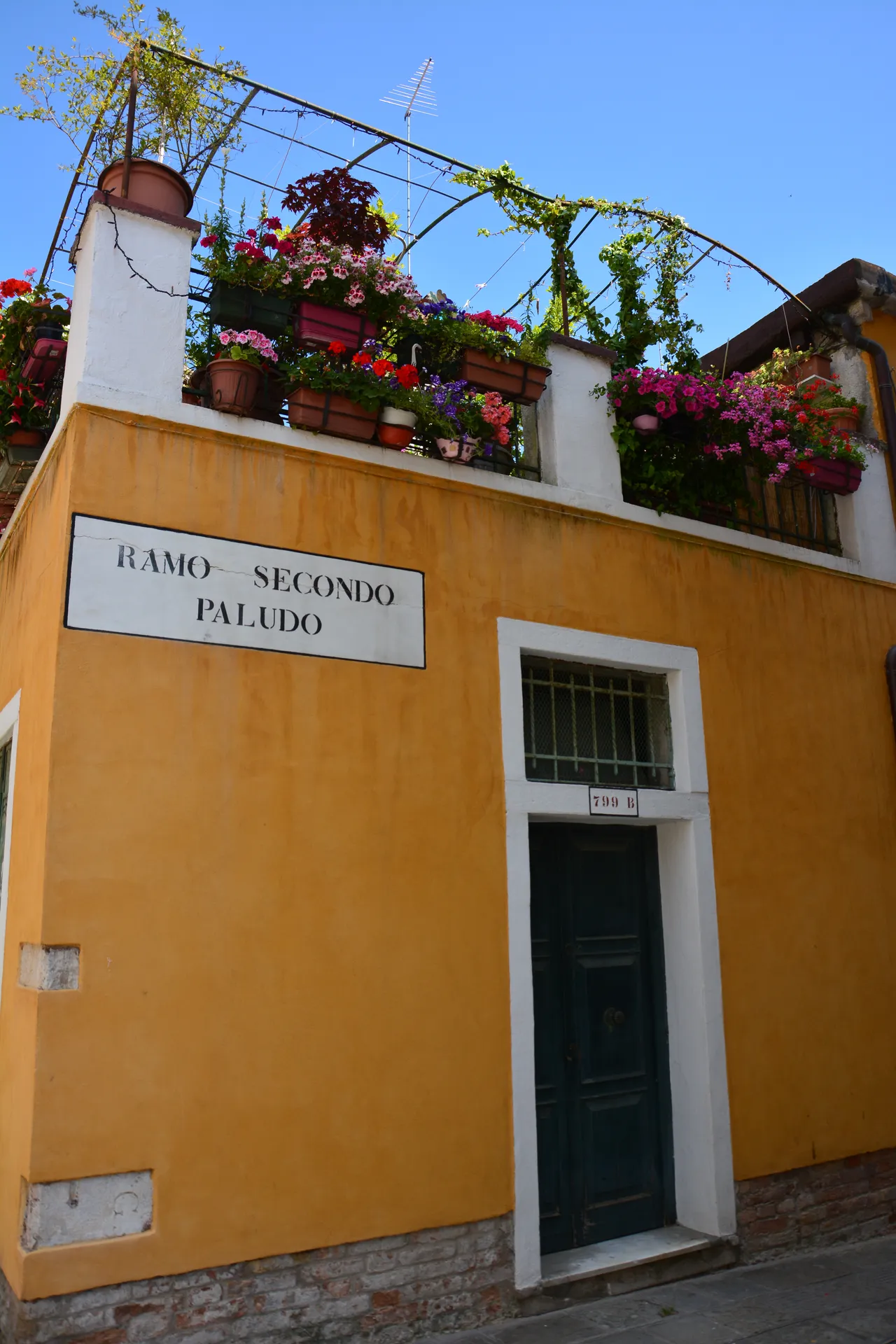
- Ramo: a short side street, often a dead end, giving access to the houses along it.
- Salizada: a main street, among the first to be paved, in brick, at the end of the 14th century.
- Ruga: an old name for long streets once lined with shops.
- Fondamenta: a walkway along a canal.
- Rio: the usual word for a canal; only the largest waterways, such as the Grand Canal and the Giudecca Canal, are called canal.
- Rio terà: a street made by filling in a canal, a practice common in the 19th century; Rio terà San Vio, in Dorsoduro, already existed before 1408.
- Sotoportego: a covered passage that runs under a building.
- Campo and campiello: Venetian squares, large and small; the only square called piazza is Piazza San Marco.
How do you read the nizioleti street signs?
Nizioleti, “little sheets” in Venetian, are the white rectangles painted on the walls with the place name stenciled in black. They use Venetian spelling, so you will read sotoportego rather than the Italian sottoportico. Street names were fixed only in the late 1700s, and names and numbers were written clearly on walls in the 1800s. Many recall a craft, such as Calle dei Fabbri, a foreign community, such as Calle dei Albanesi, or a church, such as Campo San Polo. The same name can appear in more than one sestiere, so always check both.
How can you learn to find your way?
Our Understanding Venice private orientation tour is designed for this: in about two and a half to three hours you learn how sestieri, calli and campi fit together and how the vaporetto works, so that you can explore on your own without getting lost. Our guide to what to see in Venice helps you choose where to go next. Before you travel, Venice Stay Design helps you understand where your accommodation is and how to reach it from your arrival point; you book accommodation and third-party services directly.
First time in Venice? Request a free, no-obligation tailor-made quote – reply within 24 hours.